

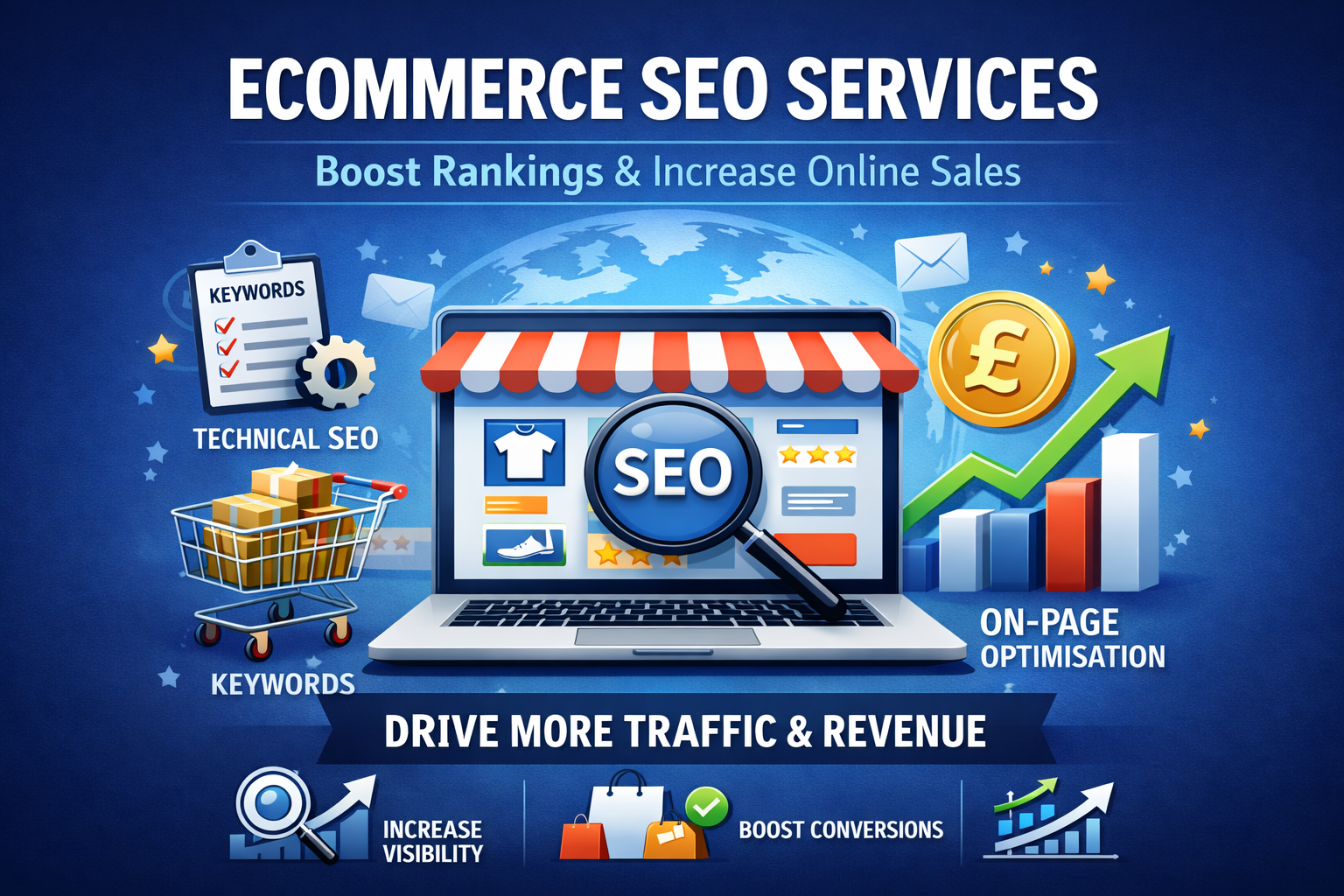
Ecommerce SEO services are specialised search engine optimisation strategies designed to increase organic traffic, improve product visibility, and boost online sales for ecommerce businesses. They matter because most customers begin product research on search engines, and higher rankings directly impact revenue. These services are essential for online retailers, multi-vendor marketplaces, and ecommerce brands seeking sustainable, long-term growth without relying solely on paid ads.
What Are E-Commerce SEO Services?
Ecommerce SEO services focus on optimising online stores to rank higher on search engine results pages (SERPs). Unlike standard SEO, ecommerce SEO addresses product pages, category structures, filtering systems, technical crawlability, and transactional search intent.
A comprehensive ecommerce SEO strategy typically includes:
- Keyword research for commercial and transactional queries
- Category and product page optimisation
- Technical SEO audits
- Site speed improvements
- Structured data implementation
- Internal linking strategy
- Content marketing for ecommerce
- Link acquisition and authority building
- Conversion rate optimisation alignment
For ecommerce brands in competitive UK markets, SEO is not optional — it is foundational to long-term profitability.
Why Ecommerce SEO Services Matter
Over 90% of online experiences begin with a search engine. When customers search for products, they rarely move past the first page of results. If your ecommerce website does not rank well, you lose potential revenue to competitors.
Professional ecommerce SEO services deliver:
- Higher organic visibility
- Increased qualified traffic
- Better product discoverability
- Improved user experience
- Sustainable return on investment
- Reduced dependency on paid advertising
Unlike paid campaigns, organic search traffic continues to generate revenue long after the initial investment.
Core Components of Professional Ecommerce SEO
1. Advanced Keyword Research
Ecommerce SEO starts with identifying high-intent keywords. These include:
- Product-specific terms
- Brand + product searches
- Category-level searches
- Long-tail commercial queries
- Comparison and buying-intent phrases
The goal is to target search terms that indicate readiness to purchase, not just informational queries.
2. Category Page Optimisation
Category pages often generate the highest revenue. Optimising them involves:
- Unique SEO-friendly copy
- Strategic keyword placement
- Optimised meta titles and descriptions
- Logical filtering systems
- Crawlable faceted navigation
- Internal linking enhancements
Well-structured category pages improve both rankings and user navigation.
3. Product Page Optimisation
Each product page should be individually optimised with:
- Unique product descriptions
- Keyword-rich titles
- Optimised image alt text
- Schema markup
- Clear calls-to-action
- Customer reviews integration
Duplicate manufacturer descriptions can severely damage rankings. Original, value-driven content is essential.
4. Technical SEO for Ecommerce
Ecommerce websites are often large and complex. Technical SEO ensures search engines can crawl and index pages efficiently.
Key areas include:
- XML sitemap optimisation
- Robots.txt management
- Canonical tag implementation
- Fixing duplicate content issues
- Site architecture improvements
- Core Web Vitals optimisation
- Mobile-first indexing compliance
Technical SEO directly impacts visibility and ranking stability.
5. Structured Data & Rich Snippets
Implementing structured data allows search engines to display:
- Product prices
- Availability
- Ratings and reviews
- Discounts
- FAQs
Rich snippets improve click-through rates and increase visibility within search results.
6. Content Marketing for Ecommerce
High-performing ecommerce sites integrate SEO-focused content such as:
- Buying guides
- Product comparisons
- Industry insights
- FAQ hubs
- Blog articles targeting long-tail searches
This content supports category and product rankings while building topical authority.
7. Authority & Link Building
Search engines prioritise websites with strong domain authority. Ecommerce SEO services include:
- Digital PR campaigns
- Editorial backlinks
- Industry directory placements
- Supplier partnerships
- Brand mentions
Quality backlinks signal trust and credibility to search engines.
How Ecommerce SEO Services Increase Revenue
Professional ecommerce SEO does more than increase traffic. It aligns traffic with buying intent.
Benefits include:
- Improved conversion rates
- Higher average order value
- Increased repeat customers
- Reduced cost per acquisition
- Stronger brand authority
When executed correctly, ecommerce SEO becomes a long-term revenue engine.
Who Needs Ecommerce SEO Services?
Ecommerce SEO services are ideal for:
- Shopify stores
- WooCommerce businesses
- Magento platforms
- Enterprise ecommerce websites
- Multi-vendor marketplaces
- D2C brands
- B2B ecommerce platforms
Whether you are launching a new store or scaling an established brand, SEO is critical to sustainable online growth.
Why Choose Webential for Ecommerce SEO Services?
At Webential, we combine technical expertise, data-driven strategy, and conversion-focused optimisation to deliver measurable results.
Our approach includes:
- Comprehensive SEO audits
- Competitor analysis
- Revenue-focused keyword targeting
- Platform-specific optimisation
- Transparent reporting
- Continuous performance monitoring
We prioritise strategies that drive revenue, not vanity metrics. Every campaign is customised to your business model, market, and growth goals.
Our Ecommerce SEO Process
Step 1: Audit & Analysis
We conduct a detailed technical and competitive analysis to identify growth opportunities.
Step 2: Strategy Development
We develop a customised SEO roadmap aligned with your commercial objectives.
Step 3: On-Page & Technical Optimisation
We implement structural, content, and technical improvements.
Step 4: Content & Authority Building
We strengthen topical relevance and domain authority.
Step 5: Performance Tracking
We provide transparent reports on rankings, traffic, and revenue growth.
Common Ecommerce SEO Mistakes to Avoid
- Using duplicate product descriptions
- Ignoring technical crawl issues
- Poor site architecture
- Overlooking mobile optimisation
- Failing to optimise category pages
- Not implementing schema markup
- Relying solely on paid ads
Avoiding these mistakes ensures long-term SEO performance.
How Long Does Ecommerce SEO Take?
Ecommerce SEO is a medium to long-term strategy. Most businesses see measurable improvements within 3–6 months, depending on competition and the condition of the website. Significant revenue growth typically becomes visible within 6–12 months.
SEO is an investment, not a quick fix.
FAQ: E-commerce SEO Services
What do ecommerce SEO services include?
Ecommerce SEO services include keyword research, product and category optimisation, technical SEO, structured data, content marketing, and link building to improve organic visibility and sales.
How much do ecommerce SEO services cost in the UK?
Costs vary depending on website size, competition, and objectives. Professional services focus on ROI rather than fixed pricing models.
Is ecommerce SEO better than paid advertising?
SEO provides sustainable long-term growth, while paid advertising offers immediate visibility. The most effective strategy often combines both.
Can small e-commerce businesses benefit from SEO?
Yes. SEO levels the playing field by allowing smaller brands to compete for niche and long-tail search terms.
Final Thoughts
E-commerce SEO services are essential for any online retailer serious about long-term growth. They improve visibility, attract high-intent traffic, and generate sustainable revenue without constant reliance on paid advertising.
If you are ready to increase rankings, drive qualified traffic, and scale your ecommerce business, Webential’s expert ecommerce SEO services provide the strategy, execution, and accountability required to achieve measurable success.
